
Payment stages / CASHIER TRACE NOTES
Casino deposit taken twice: check both entries
 Partner offers · Country: United KingdomUpdated 11 November 2026
Advertising. Bonus amounts, ratings and review counts are supplied by advertisers and have not been independently verified. Check eligibility and current terms with the operator. 18+. These international campaigns have no dedicated GB offer; GB availability has not been confirmed.

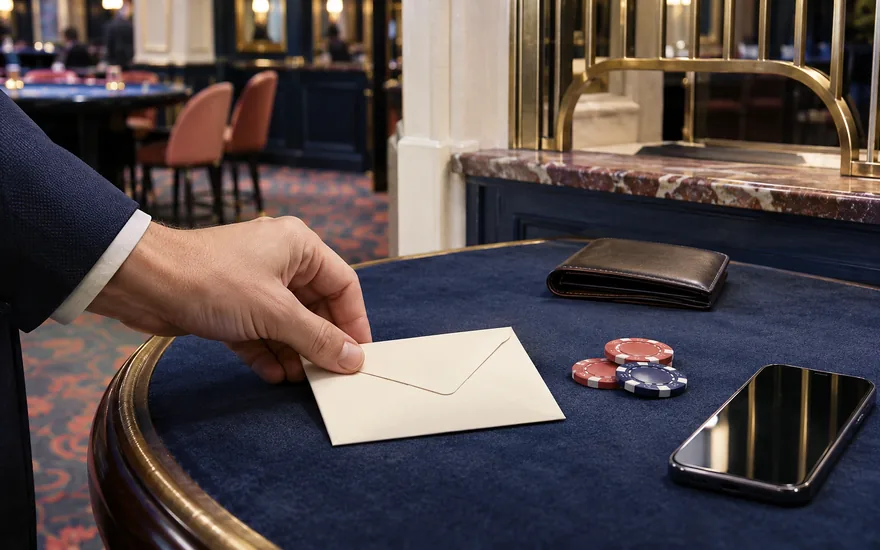

If a casino deposit appears to have been taken twice, compare both card entries and the casino ledger before requesting a duplicate-payment investigation. Two notifications, two pending entries and two completed debits are different pieces of evidence.
This note concerns two apparent debits for one intended deposit. A single card payment missing from the casino balance is a different task. Record what happened to each entry rather than using one explanation for every payment problem.
Great Britain · GBP · 18+Editorial check: 11 November 2026
On this page
- Build a two-entry record
- Pending is not the same as a settled duplicate
- Prepare the merchant enquiry
- When the card issuer needs to investigate
- Keep refunds and withdrawals separate
- One intention does not establish the number of instructions
- Count account entries rather than alerts
- Available balance and settled spending can differ
- Merchant credit is a second independent count
- A failed-looking screen does not establish payment failure
- A two-by-two comparison shows the unanswered relationship
- Times are supporting evidence rather than unique identifiers
- A reversal and a refund should keep their stated labels
- Do not count a legitimate second instruction as an error automatically
- Currency and conversion can make apparent matches misleading
- The merchant enquiry should request a reference map
- The issuer enquiry should distinguish error from non-receipt
- A returned amount can resolve only part of a larger mismatch
- Keep unused promotional funds out of the duplicate calculation
- Avoid public evidence that creates another security problem
- A closed record should explain both original entries
- Follow a fictional pair through a correction
- Questions about double card entries
- Sources
Build a two-entry record
Start with the intended deposit amount and currency. Then open each card transaction in your bank's own app or website. Record the status, time, merchant description and available reference separately, even when both lines show an identical amount.
Now open the casino's payment history and count the matching credits. One intended deposit can be associated with a confusing set of messages, but the investigation needs actual account records. An email notification alone does not establish that a second completed debit exists.
Keep the original entries when a reversal or refund later appears. Removing the old row from your notes makes the sequence harder to explain. Add the new event beside its related reference so the remaining unmatched amount is clear.
| Record | Entry A | Entry B |
|---|---|---|
| Card status | Copy the displayed wording | Copy the displayed wording |
| Amount and currency | Record privately | Record privately |
| Reference and date | Keep together | Keep together |
| Casino credit matched | Identify the corresponding credit | Identify any second credit |

Pending is not the same as a settled duplicate
Use the status shown by the card issuer. If one entry is pending, ask the bank what that state means for the identified transaction. Do not describe both amounts as permanently paid away merely because the available balance has changed.
If both entries are completed, the enquiry is more specific: which authorisation or capture belongs to each debit, and how many deposits did the merchant credit? Asking that question gives the merchant and card issuer something concrete to compare.
NatWest's multiple-charge help recognises being charged more than once using the same payment method as a transaction issue. Its debit-card query guidance recommends contacting the retailer and explains how the bank can help challenge a transaction when the issue is unresolved. That is a route for investigating an error, not a promise that a claim will succeed.
Prepare the merchant enquiry
Use the casino's normal account support route and identify the intended deposit. State that you are querying two recorded debits, with the matching payment references where available. Ask which deposits were credited and whether the merchant identifies a duplicate collection.
Do not include full card numbers, security codes or a banking password in the message. Provide the limited transaction evidence requested through the established secure channel. Keep a copy of the merchant's answer and the date, especially if it says one entry is only an authorisation.
- Record the intended amount and currency.
- Open the first bank entry and save its status.
- Open the second entry and save its status.
- Match each against the casino's deposit history.
- Ask the merchant to identify any duplicate collection.
- Retain its response before approaching the card issuer about unresolved debits.
The sequence is a comparison of records, not an instruction to deposit again. A further deposit adds another payment and can make an already unclear history harder to reconcile. It is not a test that establishes what happened to the earlier entries.
When the card issuer needs to investigate
Approach your own card issuer through its verified app, website or published contact route. Explain the duplicate transaction issue and give the records it requests. The bank needs the payment evidence and merchant response, not an account of unrelated bets.
Monzo's payment-safety explanation identifies being charged twice as one situation in which a card-payment dispute may be relevant. The issuer assesses the facts and process. A duplicate-charge enquiry must describe the genuine error; it should not reclassify a legitimate gambling loss as an unauthorised payment.
| Situation | Focus of the enquiry |
|---|---|
| Same amount appears in two notifications | Check whether two account entries actually exist |
| One completed and one pending | Ask the issuer about the pending entry's status |
| Two completed debits, one credited deposit | Ask merchant and issuer to reconcile the possible duplicate |
| Two separately confirmed deposits | Establish whether there were two instructions rather than one duplicated collection |
Keep refunds and withdrawals separate
A refund correcting a duplicate collection is different from withdrawing an available casino balance. Our withdrawal rejection note and split-withdrawal record deal with outgoing instructions, not the original duplicate debit.
Similarly, an unused voucher refund follows the provider's own route. See PaysafeCard PIN refunds or Neosurf voucher refunds only if unused voucher value is the actual issue. A card issuer's duplicate-payment process is not a voucher-balance service.
Return to the payment index to choose another stage. If the dispute remains unresolved, the complaint chronology note helps organise the amount, dates and responses. Promotional qualification remains a separate issue explained under payment eligibility.
One intention does not establish the number of instructions
Start with the intended deposit, then compare what the merchant and issuer recorded. You may have meant to pay once while the history contains more than one attempt. Your intention explains the concern; the separate transaction records explain what needs investigating.
List each bank entry with its amount, currency and displayed status. Two pending entries, a pending entry beside a settled debit, and two settled debits pose different questions. Read those states before describing both as completed collections.
This gives you a truthful opening message: one intended deposit, the observed entries, and the relationship still unclear. It lets the merchant or issuer investigate the possible error without a screenshot or duplicated notification being made to prove more than it shows.
Count account entries rather than alerts
Open the issuer's transaction history and count the entries there. A push notification, email and in-app message may all concern the same payment. Their number is a reason to look carefully, not a debit count by itself.
If two alerts lead to one entry, note that finding. If two account entries exist, open both and save the current status, reference and date. Continue the comparison from those records rather than the notifications.
In your private notes, label the rows A and B and put the real issuer reference beside each. The letters are just organising labels. Add later reversals or refunds to the relevant row once the connection is confirmed. This helps prevent a correction from being paired with the wrong debit when both amounts look identical.
Available balance and settled spending can differ
A pending card entry can affect an available balance before its final treatment is established. Ask the issuer what the specific status means. A balance reduction alone should not be described as two permanently settled payments without examining the underlying entries.
For an invented account, an apparent £20 reduction beside one £10 settled debit and one £10 pending entry requires a status explanation. The arithmetic describes the observation. It does not establish whether the pending entry will settle, expire or receive another treatment.
Do not publish a universal release time for a pending item based on another bank's help. The issuer and actual transaction state matter. Retain the issuer's guidance for the identified entry, including what event or condition it says should happen next.
Merchant credit is a second independent count
Now inspect the casino's deposit history. Count the credits connected to the intended payment and record their references. Two completed card debits with one merchant credit raise a different question from two completed debits with two separately confirmed deposit instructions.
One merchant balance screenshot can be insufficient because other activity may have changed the total. The deposit ledger is the better record for identifying how many funding events were credited. Keep game stakes, awards and withdrawals out of this initial count unless they explain a specific relevant entry.
If the merchant history shows only one credit, ask the merchant to identify whether a second card collection occurred. If it shows two, ask which accepted instruction produced each. The answer should connect references, rather than rely on the shared amount alone.
A failed-looking screen does not establish payment failure
A browser interruption or error message can occur while the final transaction status remains unknown. Save what the screen said and its time, but do not assume it proves that no payment instruction was accepted. The issuer and merchant records need checking.
Pressing submit again can create another attempt. That possibility should be described honestly if it happened. It does not settle whether the merchant duplicated a collection, but it helps distinguish repeated instructions from two collections attributed to one accepted instruction.
There is no need to make another deposit to test the interface. A new payment cannot reveal the final status of an older one and introduces another entry. Investigating the existing references is more useful than trying to reproduce a financial error with additional money.
A two-by-two comparison shows the unanswered relationship
Use this hypothetical case to map the records: the card has entries A and B for £15 each, while the merchant has one £15 deposit, C. Together the card entries show £30 and the merchant credit shows £15. The missing information is how C relates to A and B.
If the merchant links A to C and says it did not collect B, ask the issuer about B's current status. If the merchant confirms collecting B as well, ask where that collection's credit or correction appears. Each answer gives the next enquiry a narrower target.
Do not match C to both independent debits simply to make the notes look complete. Any combined treatment needs an explicit explanation. Keep the unmatched row open until the merchant or issuer connects it to an accepted instruction, status change or correction.

Times are supporting evidence rather than unique identifiers
Two entries close together can suggest related activity, but timestamps alone do not establish duplication. Systems can display authorisation, posting or notification times differently. Copy the time label and timezone where visible instead of assuming every timestamp records the same event.
If a pending entry later posts under a different date, preserve the earlier observation. The issuer can explain whether it is the same transaction changing state. Do not count every status update as a new debit merely because the displayed date changed.
A reference relationship is stronger than a resemblance in amount and time. Where no reference is exposed, ask the responsible service how it distinguishes the entries. Mark that connection as unconfirmed until the issuer or merchant explains it for the specific transactions.
A reversal and a refund should keep their stated labels
Save the description used for a later correction and ask which original entry it concerns. A reversal and a refund may appear as money returning, but their recorded treatment belongs in the history. Neither should be relabelled casino winnings just because it increases the balance.
In a hypothetical pair of £12 debits followed by one £12 correction, the net debit is £12. To decide whether that accounts for the intended deposit, you still need the merchant credit and the correction's linked reference. The sum checks the amounts while the references explain the relationship.
If a correction changes status later, add a dated observation. Ask the issuer which entries are final and which remain provisional. A single balance after the change cannot replace the sequence of debit and correction records.
Do not count a legitimate second instruction as an error automatically
Two separately confirmed deposits can explain two debits without a duplicate collection. If you submitted twice, describe that fact. The merchant and issuer still need to explain what was accepted and collected, but the enquiry should not conceal a second instruction.
Conversely, two bank entries do not prove that you intentionally authorised two separate deposits. That is the relationship being investigated. A truthful record can state one intended deposit, two observed entries and uncertainty about the second instruction's acceptance.
The objective is to establish the genuine payment history. It is not to reclassify ordinary gambling losses as unauthorised transactions or to select whichever description seems most likely to secure a refund. The actual issuer process should receive accurate facts and supporting evidence.
Currency and conversion can make apparent matches misleading
A card entry and merchant credit may use different currencies. Record both before comparing the digits. Two entries of the same foreign-currency amount can also produce different home-currency figures if the actual transaction treatment differs; the issuer's breakdown is needed to explain that difference.
This article does not invent an exchange rate or a bank charge to make an unmatched total balance. Ask which amounts and currencies belong to each instruction. Keep any disclosed conversion and fee separate from the question of whether one collection occurred twice.
If all records are in pounds, say so in the enquiry. Removing an irrelevant conversion hypothesis can make the duplicate question clearer. A useful summary distinguishes facts already established from possible explanations that the records have not confirmed.
The merchant enquiry should request a reference map
State the intended deposit and identify entries A and B with their actual references through the secure support channel. Ask how many deposits were accepted, how many collections occurred and which merchant credit corresponds to each completed debit. Those questions target the relationship between the systems.
If the merchant says one item is an authorisation, retain that answer and ask the issuer what the corresponding entry currently represents. The merchant's explanation is useful evidence, but the issuer can describe its own displayed status. Keep the two statements labelled by source.
Do not send a banking password, card security code or one-time authentication code as proof. A masked transaction image and the details requested securely can identify the payment without disclosing credentials that authorise unrelated access or spending.
The issuer enquiry should distinguish error from non-receipt
If the genuine issue is duplicate collection, describe the two entries and the merchant's response. If the issue is one debit with no merchant credit, say that instead. The bank may need different evidence for those different transaction questions.
Use your own issuer's verified support route. NatWest and Monzo's cited information illustrate that transaction queries exist, but they do not decide another bank's procedure or the result of a particular claim. The issuer assesses the actual evidence and applicable process.
Keep submission dates and any case reference. If additional evidence is requested, connect it to that case rather than starting an unrelated account of events. A later correction should be reported accurately so that the remaining disputed amount is not overstated.
A returned amount can resolve only part of a larger mismatch
Acknowledge a partial correction in the disputed amount. Suppose, hypothetically, two £18 debits are followed by a £10 correction intended to address one duplicate. There is still an £8 question. The record should show both the returned £10 and the unresolved £8.
Ask what the correction represents and whether another adjustment is expected. The £8 difference does not identify a fee. Nor can an unrelated £8 credit close it without a confirmed connection to the original debit.
Keep each debit and correction on its own line, then calculate the net amount from the linked records. This gives support a specific remainder to explain and prevents a partially resolved case from being described as either fully returned or wholly unpaid. Correct arithmetic matters, but it must use the transactions that belong to the enquiry.
Keep unused promotional funds out of the duplicate calculation
A casino promotion can change how the account labels available funds, but it does not establish whether a card was collected twice. First reconcile the funding instructions and credits. A bonus balance is not automatically a refund of an extra card debit.
If the merchant says an adjustment relates to a promotion, ask for that entry and its applicable rule separately. Do not subtract a nominal promotional award from a real duplicate claim as though both were interchangeable cash movements unless the actual records and explanation support that treatment.
Similarly, accepting a promotional offer does not prove that every payment entry is correct. These questions should remain separate. The transaction enquiry concerns the real debit and credit trail, while reward eligibility concerns the identified offer and its conditions.
Avoid public evidence that creates another security problem
A public screenshot should conceal full card details, unrelated transactions, addresses and account identifiers. Preserve an unchanged original privately for the authorised enquiry. Redaction protects information, but it should not alter the amount, status or date being discussed.
Be cautious with messages offering a guaranteed recovery for an upfront payment. Verify any contact independently through the bank or merchant's established route. A person who knows the amount from your public post has not thereby demonstrated access to the official transaction investigation.
Cashier Trace does not collect dispute files, submit bank claims or guarantee reimbursement. Its images and examples explain a process of comparison. They do not represent access to a reader's bank account, merchant ledger or the issuer's assessment of a genuine claim.
A closed record should explain both original entries
The enquiry is reconciled when each observed entry is connected to an accepted instruction, a confirmed status change or an explained correction. A response about only one of two completed debits leaves the second row open, even if the overall account remains usable.
State the final net disputed amount after acknowledged corrections. Retain the merchant and issuer references with the outcome. This makes it possible to see why the case closed without relying on a later headline balance that may contain unrelated activity.
If one relationship remains unknown, name it directly. One confirmed deposit and one unmatched completed debit is a specific unresolved question. That is more useful than a general statement that the site took everything twice, and it keeps the claim proportionate to what the records actually establish.
Follow a fictional pair through a correction
Consider one hypothetical £22 deposit with two £22 card entries and one merchant credit. At the first check, A is completed and B is pending. Save those states. The opening message should describe one completed debit and one pending entry, rather than claiming two final collections.
There are two possible later histories to distinguish. In the first, B disappears from pending and the issuer confirms it was not collected. Keep that confirmation with B. It explains why two entries were visible without calling the vanished pending entry a refund of a completed debit.
In the second, B becomes completed and the merchant identifies a duplicate collection. A later £22 refund linked to B then produces a different history: two completed debits and one connected correction. Both histories can leave a net £22 debit, but the route to that total differs.
These alternatives illustrate record-reading, not a prediction of how your issuer will handle a pending item. The dated statuses and linked references tell you which history applies; a final balance alone cannot reconstruct it.
If neither is confirmed, ask the issuer what happened to B and the merchant which collection funded the credited deposit. Leave the second row unresolved until those records explain it. There is no need to choose the more reassuring explanation or the more serious allegation merely because either could fit the arithmetic.

Questions about double card entries
Can my bank refund gambling transactions online?
A genuine duplicate-payment issue can be investigated through the card issuer's transaction-query process. It is not a general entitlement to reverse gambling losses; describe the actual payment error and evidence.
Can I dispute a casino transaction?
Contact the merchant about the identified error and your own card issuer if it remains unresolved. The issuer decides what evidence and process apply to that transaction.
I was charged more than once: what should I check?
Compare the individual bank statuses and references with the number of deposits credited. NatWest's help treats multiple charges using the same method as a transaction-query category.
How do I query a debit-card transaction?
NatWest's help recommends contacting the retailer about the identified problem and explains the bank's route for an unresolved debit-card query. Use your own issuer's verified support and retain the two transaction records.