Money & payments / THE AMOUNT DICTIONARY
Minimum casino deposit meaning: identify the threshold
 Partner offers · Country: United KingdomUpdated 11 November 2026
Advertising. Bonus amounts, ratings and review counts are supplied by advertisers and have not been independently verified. Check eligibility and current terms with the operator. 18+. These international campaigns have no dedicated GB offer; GB availability has not been confirmed.

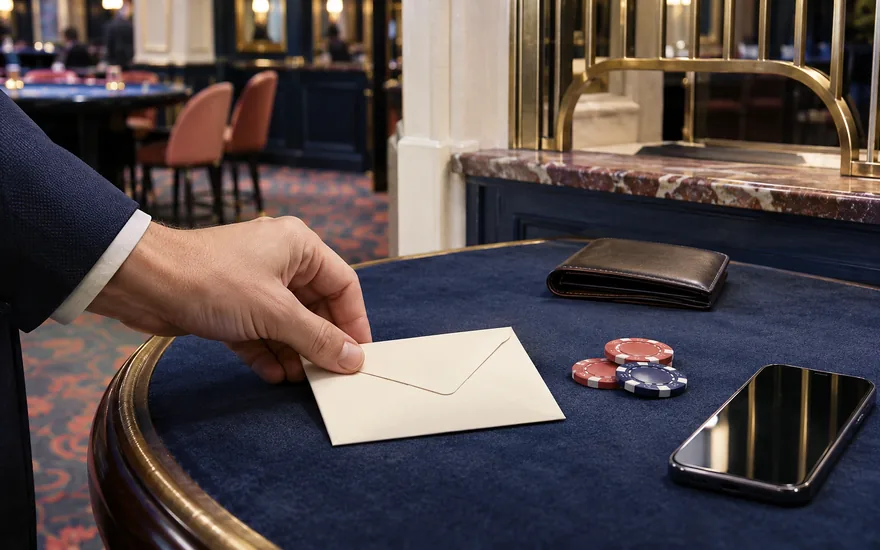

A minimum casino deposit is the smallest payment a cashier accepts for a particular deposit route in the selected account currency. It is separate from a bonus qualification amount, a game's minimum stake and any personal deposit cap you set.
Cashier Trace explains the amounts attached to payments and game results. Start with the label beside the figure: deposit, qualifying deposit, bet or withdrawal. The same pound amount can describe a different obligation in each place.
Great Britain · GBP · 18+Editorial check: 11 November 2026
On this page
- Which amount are you looking at?
- Why can two payment buttons show different minimums?
- Does a small deposit qualify for a bonus?
- Read the final payment amount, not just the input box
- A worked example of four different thresholds
- What should you save if the figure is disputed?
- Where to go after identifying the amount
- A useful minimum is a number with a complete label
- Build the amount description before comparing payment routes
- Separate the amount typed, authorised and credited
- Read pounds and pence without changing the unit
- A displayed floor is not a reason to increase planned spending
- Follow one hypothetical payment through a simple record
- What changes when a wallet is between the bank and the cashier?
- A voucher value and an accepted payment can be different amounts
- Check whether a maximum describes one instruction or a period
- Promotional language cannot establish the minimum by itself
- A game's smallest stake does not answer a cashier question
- Use balance arithmetic to locate a question, not invent an answer
- Screens on a phone need the same reading order
- Save context that can answer a later question
- Recognise when a question belongs on another page
- Finish with a defined amount and a clear next decision
- Questions about deposit amounts
- Sources
Which amount are you looking at?
A cashier minimum belongs to a payment transaction. If a method has a stated floor, entering less can prevent that instruction from being submitted. It does not tell you how many rounds the resulting balance will buy, whether a promotion applies or whether the operator supports withdrawals through the same route.
A personal deposit limit has the opposite purpose: it restricts what you can put into an account over its specified period. Do not raise a protective limit simply because a cashier minimum is higher than the amount you intended to spend. You can leave without making the payment.
| Label beside an amount | What it describes | What it does not establish |
|---|---|---|
| Minimum deposit | Floor for one payment instruction | Minimum spend on games |
| Qualifying deposit | Payment required by a particular promotion | Acceptance of every funding method |
| Minimum stake | Smallest permitted game wager or position | Cashier transaction minimum |
| Withdrawal maximum | A specified payout constraint | An automatic cap on your entire cash balance |

Why can two payment buttons show different minimums?
Each payment route can have its own floor. The method, account currency and cashier product all help identify which rule applies, so two buttons in the same account may show different amounts. For the exact minimum, select the relevant method and read the amount shown for that instruction. An old review or another product from the same company may describe a different route.
The payment provider can also have its own account or transfer rules. Those are not automatically the casino's conditions. A wallet funding requirement, for example, concerns putting money into the wallet; it does not by itself establish the smallest subsequent merchant payment. Check which stage the quoted threshold belongs to before comparing it.
There is no single minimum for every GB cashier that this page can quote accurately. To answer “what is the minimum here?”, you need the operator, selected method, payment direction, account currency and date. With those labels attached, the displayed amount can answer a specific question. Without them, even an exact figure may belong to another account or a different stage of the payment.
Does a small deposit qualify for a bonus?
Not necessarily. A promotion may use a different qualifying amount or restrict which payments count. A deposit can reach the cash balance successfully while creating no entitlement to a promotional balance. Acceptance of the money and qualification for a bonus are two different decisions.
Read the eligibility conditions before authorising any payment. If the terms do not identify your method clearly, obtain an answer first. Making another deposit to repair an assumption can increase spending without resolving the original qualification issue. Our payment eligibility guide explains which conditions to distinguish.
Promotional restrictions also need to be separated from access to your own cash. The Gambling Commission's guidance distinguishes the deposit balance from bonus funds. A condition governing a promotion should not be casually read as permission to withhold all money in an account. Keep a copy of the specific wording if a dispute arises.
Read the final payment amount, not just the input box
Before confirming, identify the currency in both the cashier and your funding account. An input of ten units is meaningful only with its currency. A payment from a differently denominated account can involve conversion, and the funding-account debit need not match the number originally typed into the merchant form.
Look separately for any operator processing fee and any charge disclosed by the payment provider or bank. Do not infer that one party's zero-fee wording also covers every other party. Stop if the confirmation screen does not show enough information to understand the amount being authorised.
The smallest accepted deposit is not a spending recommendation. Essential bills and borrowed money should not fund gambling. In Great Britain, credit-card gambling is prohibited, including attempts to route credit-card funds through an intermediary. An alternative payment button does not remove that restriction.
A worked example of four different thresholds
Suppose an imaginary cashier accepts deposits from £6, an imaginary promotion requires £12, and a game has a £0.30 minimum stake. These numbers are examples, not an offer or a description of a real operator. A £6 deposit meets the first condition but does not meet the second.
Dividing £6 by £0.30 gives twenty, but that ratio is not a guaranteed round count. Results can change the balance, and the selected stake can change too. First confirm that £0.30 is the game's full wager: a chip or denomination may be only one component. The calculation compares two amounts under fixed assumptions; it cannot tell you how a session will unfold.
Add a fourth threshold to the same fictional example: suppose only £4 remains within a personal deposit limit. A £6 payment would exceed that remaining allowance even though it meets the cashier floor. The two conditions pull in different directions. The floor describes what the route accepts, while the personal limit restricts funding. Leave the payment unmade instead of raising the protective limit to fit the cashier.
| Example question | Relevant amount | Result of the comparison |
|---|---|---|
| Can the payment be entered? | £6 cashier floor | £6 meets that floor |
| Does this payment meet the example offer amount? | £12 qualifying threshold | £6 falls short |
| Is £0.30 the full selected wager? | Game total-bet display | Must be checked in that game |
What should you save if the figure is disputed?
Record the date, method label, currency and wording shown before confirmation. Keep the payment reference and the account history entry if a transaction occurred. A screenshot of a generic home-page claim is less useful than the specific instruction you actually authorised and the terms applying to it.
Do not send a PIN, password, full card number or one-time code to someone offering to investigate. Use the operator's established account-support route. If the disagreement cannot be resolved informally, a concise written complaint can distinguish the displayed threshold from the amount charged and the remedy requested.
Where to go after identifying the amount
Keep the original question in view when browsing further. A table of minimums cannot answer whether a withdrawal destination works, and a game-rule page cannot establish a cashier charge. Write down the specific amount and label you need explained before following another link. This prevents a different threshold from appearing to answer the question simply because it uses the same currency.
For money leaving an account, start with transfer maximums and the deposit balance. If one request has produced payments to several destinations, read split withdrawal allocation. A request marked rejected needs the separate rejection guide, rather than assumptions about a pending transfer.
For amounts inside games, our game notes distinguish returned stakes, winning bets and repeated evaluations within one round. These explanations do not identify a profitable game or predict returns. If checking the figures is becoming a reason to keep gambling, the support page offers a different next step.
The named-game catalogue now follows ten specific releases, with separate feature rules and checked demo status. Use it when a general mechanic explanation is not enough to identify the game.
A useful minimum is a number with a complete label
Write the amount as a small description rather than an isolated figure. “£8 minimum for one card deposit into this GBP account” contains a currency, an action, a route and a unit. “From eight” contains none of those boundaries. The extra words are what make the figure useful. They also reveal when two apparently similar amounts cannot yet be compared, even if both are displayed beside a payment logo.
The account currency and the funding currency should have separate labels. A cashier can ask for pounds while a funding account records another currency. An amount entered into the cashier is therefore not always the amount later shown on the funding statement. Before comparing the two, identify the currencies and any displayed conversion. A numerical difference is not, by itself, proof of either a fee or an incorrect charge.
Keep the time of observation with the description. A method selected yesterday and a different method selected today may produce different instructions. That does not establish why the figures differ, but it tells you which screens need to be compared. A useful note says what was selected and when. It does not try to turn a remembered home-page headline into the terms of a transaction that was never saved.
Finally, identify whose figure it is. A merchant's cashier floor, a wallet's funding threshold and a bank's transfer rule can all appear during one journey. Each belongs to a different decision. The correct question is not simply whether eight is a small amount. It is whether that particular instruction, in that currency and through that route, can be submitted for the amount you intended.
Build the amount description before comparing payment routes
Imagine two fictional payment options. Option Cedar shows a £7 transaction floor; option Birch shows £10. If those are genuinely the same currency and action, Cedar has the lower displayed floor. That limited comparison is valid. It does not establish that Cedar costs less overall, reaches the balance sooner, supports a later withdrawal or qualifies for a particular promotion. Those require their own information.
Now change the example: Cedar's £7 describes adding money to a wallet, while Birch's £10 describes paying a merchant directly. The numbers no longer answer the same question. Cedar may still have another merchant-payment stage after the wallet is funded. Comparing seven and ten without describing the stages would conceal that difference. The smaller figure can be arithmetically smaller while remaining irrelevant to the decision being made.
A practical comparison sheet starts with four columns: action, currency, method and amount. Add disclosed costs and eligibility in separate columns when those facts are available. This keeps “lower floor” separate from “lower cost” and “qualifies for the promotion”. If a fee or processing time is unknown, leave it unknown. A precise answer about one attribute is more useful than a row of advantages inferred from the smallest displayed number.
When a fact is missing, write down the question that would resolve it. “Does this floor apply to one merchant payment or to funding the wallet?” is answerable. “Is this the best payment method?” combines several preferences and unknowns. The payment-stage index can help identify the relevant journey, while the present page remains concerned with the meaning of the amount attached to an instruction.
Separate the amount typed, authorised and credited
The number entered into a field is only the beginning of a payment record. A confirmation screen can present a final amount and currency before authorisation. A later merchant history can record a credit. Those three observations may correspond, but their relationship should be checked rather than assumed. Preserve the labels used at each stage, especially when a separate fee or conversion is disclosed.
Consider a hypothetical confirmation showing a £14 merchant amount and a £1 charge. If the charge is additional, the total is £15. If it is included in the £14, the total remains £14. Look for “included”, “additional” or an explicit total before adding the figures. These teaching amounts describe two ways a screen could present a charge; they say nothing about the fee at a real operator. The label decides which calculation is appropriate.
An available balance can also contain money that was already present. Suppose the starting balance was £3 and a new £14 credit appears. A later display of £17 is consistent with those two entries, before any other activity. It does not mean the payment itself was £17. A before-and-after comparison needs the opening balance and any intervening entries; otherwise an account total can be mistaken for a transaction amount.
This distinction becomes especially useful when a payment appears twice or a credit seems missing. Begin with the intended amount, the authorised instruction and the merchant record. Do not make another payment merely to test whether the first one worked. A separate article covers two card entries for one intended deposit, where the question is the relationship between records rather than the cashier's minimum.
Read pounds and pence without changing the unit
Currency formatting can make a simple amount look more complicated than it is. In a GBP example, £4.50 and 450 pence describe the same quantity. They are not two separate charges, and the decimal point does not turn the figure into a percentage. Keep the currency sign, decimal places and label together when copying an amount into your own notes.
Percentages need a different description. A 50% match on an illustrative £12 qualifying payment produces £6 of matched credit before any cap or other condition is considered. The result is a calculation about a promotion, not a change to the cashier's payment floor. If a cashier accepts £8, that acceptance cannot be used to infer the qualifying payment for the separate match. The two figures belong to different rules.
Rounding should be recorded at the place where it occurs. If a screen rounds an equivalent amount for display, do not infer that the funding statement will necessarily use the same presentation. Likewise, a chip denomination is not automatically a game's full selected bet. A decimal shown next to one component may need another quantity before the complete wager can be understood.
When reporting a discrepancy, reproduce the amount exactly as it was displayed and explain what it was labelled. “The confirmation showed GBP 4.50” is clearer than “it said four or five”. Do not silently round a disputed amount to a convenient whole number. Precision in the record helps distinguish a genuine difference from a copying error, a currency change or a comparison of unlike units.
A displayed floor is not a reason to increase planned spending
The minimum accepted by a payment route describes the route. It does not decide what you can afford, and it does not establish that a payment should be made. If the amount you intended is below the displayed floor, leaving without paying remains a complete outcome. A minimum is not an obligation to bridge the gap with money intended for something else.
A larger preset may be highlighted before you enter anything. Check the selected field and final confirmation against the amount you intended; the prominent button may not match it. The same check applies when a promotion asks for more than you had planned to pay. That is a qualifying condition you can decline. Its presence on the screen supplies no reason to increase the amount or treat qualification as a benefit in itself.
Do not combine several methods simply to overcome an unexplained restriction. That can create multiple records while leaving the original question unanswered. First identify whether the issue concerns a transaction floor, an account setting or an unavailable route. The fact that another button exists does not explain the first button's message, and a new successful instruction would not retrospectively clarify an earlier one.
The useful stopping point is understanding the amount before authorising it. This publication can explain labels and calculations, but it cannot assess a personal budget or decide that gambling is appropriate. If the search for a smaller amount is becoming part of a repeated attempt to keep playing, the independent support page offers a different next step without requiring another payment or a resolved account dispute.
Follow one hypothetical payment through a simple record
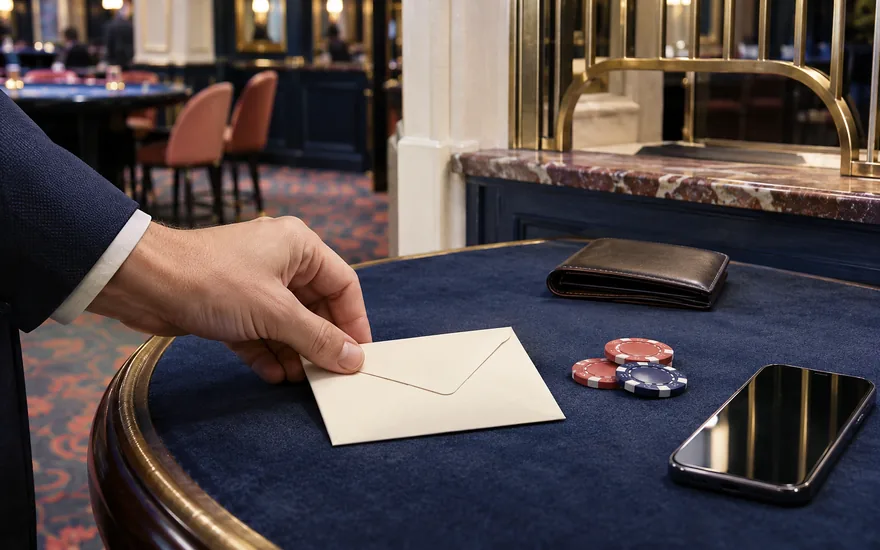
Follow a fictional £11 payment through a cashier showing a £9 floor for the selected GBP route. At the amount check, £11 meets the floor because it is £2 above it. That answers the first question only. Approval by the funding provider and eligibility for a reward remain separate checks. The record becomes easier to follow when each stage answers its own question instead of treating the first successful comparison as approval of the whole journey.
Before confirming, the person records the final amount and the wording beside it. After confirmation, they retain the reference shown for the instruction. Later, they compare the merchant history with the funding record. The record can be short: intended £11, confirmed £11, reference A, merchant credit £11. If another entry appears, it should be added as another observation rather than merged into a story about what must have happened.
Continue the example with a £20 account balance after payment. You still need the opening balance to explain the difference between that total and the £11 instruction. If the funding record instead shows a pending entry, record it as pending at the time checked. These observations belong in their own columns. Neither the account total nor a temporary funding status should silently replace the amount and status of the payment instruction itself.
At each stage, the next question should refer to the latest supported observation. “Which credit corresponds to reference A?” is more precise than “Where is my money?” when several balances are involved. If there is no payment reference because nothing was confirmed, do not invent one. A failed attempt to submit a below-minimum amount and a confirmed payment are different situations, even when they began on the same screen.
What changes when a wallet is between the bank and the cashier?
A wallet introduces another place where an amount can be described. Money added to the wallet is not automatically money paid to a casino. The wallet may show its own balance, funding entry and later merchant payment. A minimum on the wallet-funding stage therefore cannot be substituted for the amount required by a different merchant instruction.
For a clear record, name the start and destination of every movement. “Bank to wallet” and “wallet to merchant” are different descriptions. A successful first movement does not prove that the second was authorised. Likewise, a merchant refund into a wallet and a later withdrawal from the wallet to a bank are separate instructions. Their references, amounts and currencies should not be treated as interchangeable simply because they concern the same original money.
This page does not list a universal wallet minimum. The meaningful amount is the one shown for the selected action in the relevant account. If a quoted number belongs to a different country, currency or wallet product, it does not become a GBP cashier rule by conversion alone. An exchange-rate calculation can change units; it cannot make an unrelated product condition applicable.
The dedicated PayPal-to-bank note and Skrill-to-bank note concern a later stage after money is available in a wallet. They should not be read as instructions for selecting a casino deposit route. Choosing the page that matches the actual movement prevents a technically accurate answer about one stage from being used to explain a different one.
A voucher value and an accepted payment can be different amounts
An unspent prepaid voucher has a value associated with the voucher. A merchant payment is a separate event. The value printed or recorded when the voucher was bought does not, by itself, establish how much was spent with a merchant or what remains unused. Keep the purchase record, the remaining-value observation and any merchant payment reference as separate pieces of information.
For a fictional voucher worth £18 with £5 used, the remaining value is £13. Keep all three labels: original value, spent amount and unused value. If the example merchant has a £10 transaction floor, compare that floor with the intended merchant payment, not with the old purchase price. The numbers illustrate the relationship only; they identify no available denomination and make no claim that a particular site accepts the voucher.
Refunding unused voucher value is another distinct question. It should not be described as withdrawing casino winnings when the money was never credited to a casino. The organisation handling the unused value may need its own evidence. A merchant dealing with an already spent payment may need a different record. First establish where the value currently sits before choosing a support route.
The separate PaysafeCard code-refund guide and Neosurf voucher-refund guide keep that boundary visible. They do not imply acceptance by every casino or replace the provider's own current process. If the only information available is a voucher's original value, that is not enough to infer a merchant minimum, a completed payment or a refundable remaining balance.
Check whether a maximum describes one instruction or a period
A minimum and a maximum can be displayed in the same cashier without using the same unit. One might apply to a single payment, while another might describe a total over a stated period. The labels need to be read independently. Do not assume that two amounts share a transaction or time boundary merely because they appear on the same screen.
Consider a fictional £10 single-payment floor alongside a £30 daily total. One instruction is checked against £10; the day's relevant instructions are checked against £30. Three payments of £10 add to £30, showing how a transaction amount and a period total relate mathematically. Whether any payment can be made still depends on the applicable account rules. This example supplies neither permission for repeated instructions nor a rule used by a real provider.
The period itself also needs a definition. A calendar day, an elapsed period and a named account window are not automatically interchangeable. If the relevant wording is unclear, preserve it and obtain an explanation rather than guessing when a counter resets. A remembered time from a different product is not evidence for the current account.
This is another reason not to treat a rejected instruction as an invitation to try several smaller ones. The actual reason might concern a different account rule, and repeated attempts can make the record harder to understand. The withdrawal-maximum explanation examines outgoing constraints in more detail. Here, the important habit is to attach the correct unit to both ends of a displayed range before interpreting it.
Promotional language cannot establish the minimum by itself
A promotional headline may describe a percentage, a reward cap or an additional item. None is automatically a statement about the smallest accepted payment. A large percentage can apply only after a separately defined qualifying amount; a cap can limit matched credit without describing the cashier at all. Read the full condition attached to the figure you are actually trying to understand.
Suppose an illustrative promotion advertises a 100% match capped at £20. A hypothetical £12 qualifying payment would produce £12 in matched credit under that calculation, while a £30 qualifying payment would reach the £20 cap. Neither example tells you whether the cashier accepts £5. The match formula and the payment floor are separate inputs, and changing one does not mathematically determine the other.
The same caution applies to packages containing spins. A spin count needs its stated stake, eligible game and conditions before its unit can be compared with credit. It is not a cash figure simply because the advertisement places it beside a pound sign elsewhere. Our comparison library separates those reward models instead of forcing them into one unsupported total.
The inactive listing space on this homepage deliberately makes no operator claim. A blank logo, missing offer and disabled control do not establish acceptance, a rating or a current promotion. Until a real listing is supplied, the explanatory text should be read independently of that space. It is an empty position in the page, not evidence that a particular casino meets any deposit condition.
A game's smallest stake does not answer a cashier question
A game stake belongs to a round or betting position. A cashier deposit belongs to moving money into an account. Even when both are expressed in pounds, they occur at different stages and use different rules. The size of a game button cannot establish the smallest payment accepted by a funding route, and a cashier floor cannot establish a game's full selected wager.
For a fictional £9 balance and £0.45 full stake, division gives twenty stakes in a simplified model with no intervening returns or stake changes. That can help check units, but a game session is a sequence of results, not a fixed division. The balance may change after each round. The ratio therefore gives neither a reliable round count nor a time estimate, and it supplies no reason to spend the balance.
Different games can also label stake components differently. A denomination, chip value or amount per component may be only part of the total selected wager. The full bet should be identified through the particular game's own rules and confirmation display. This site keeps those game-specific questions in separate notes so that a general explanation of payment amounts does not pretend to replace a rulebook.
For a table example, the roulette minimum guide distinguishes a chip value from a table condition. For slots, the named-game catalogue separates releases and mechanics. Those pages help define a game amount. They do not provide evidence that a casino accepts a particular deposit route or that a low stake makes gambling affordable for a particular person.
Use balance arithmetic to locate a question, not invent an answer
A simple balance reconciliation can show where more information is needed. Start with an opening amount, add documented credits and subtract documented debits. Compare the calculated result with the displayed closing amount. If the figures differ, that difference is a question to investigate. It is not yet proof of the reason for the difference.
For example, an opening £6 plus a confirmed £13 credit gives £19 before other entries. If the closing display is £17, two pounds remain unexplained in that simplified record. Possible explanations should not be supplied from imagination. The next task is to identify any missing entry, different balance category, currency change or observation time. The arithmetic locates a gap; the underlying records explain it.
Use signed entries consistently. A return to a funding method is an outgoing movement from the merchant's perspective, even though it may later appear as incoming money elsewhere. Counting it as a credit in both places would inflate the apparent total. Likewise, adding a promotional amount to a cash figure without keeping categories can make a later difference look like missing cash when unlike balances were combined.
A practical ledger can remain very short. It needs a date, amount, currency, direction, description and reference where one exists. Keep estimates out of the confirmed column. If an amount is uncertain, label the observation as uncertain rather than adjusting another entry to force the total to balance. A tidy-looking record is less useful than an honest one that shows precisely what remains unknown.
Screens on a phone need the same reading order
On a small screen, the method label, amount and confirmation can be separated by scrolling. Read them as one instruction even if they are not visible together. A cropped screenshot of only the amount may omit the currency or route that makes it meaningful. Save enough surrounding context for your own record without exposing private account details unnecessarily.
Preset buttons can also move or wrap on a phone. Their position in a row does not define which amount is selected. Check the current field and final confirmation rather than remembering that the first button used to mean a particular amount. A layout change is not evidence of a changed cashier rule, but it can make a previously remembered interaction unreliable.
If the page does not display enough information to understand the instruction, stop before confirmation. Refreshing a purely informational page is different from resubmitting an already authorised payment. Do not keep pressing a payment control because a response is slow. First establish whether the original action created a reference or history entry; otherwise several attempts can become difficult to distinguish.
When using this publication on mobile, the Play control opens the game-note catalogue. It does not authorise a payment, create a casino account or make the inactive homepage listing clickable. The distinction between reading controls and financial controls matters. A local navigation button can change the article being read without moving money, while a confirmation inside an actual cashier has a different purpose.
Save context that can answer a later question
The most useful evidence is often modest: the selected method, the currency, the exact wording beside the amount and the final reference if an instruction was confirmed. A large collection of unrelated screenshots can be harder to interpret than a short sequence with clear dates. Keep the order of events and the label attached to each figure.
Preserve original records privately and make a separate redacted copy if a description needs to be shared through an appropriate channel. A public explanation rarely needs a complete card number, identification document or unrestricted account history. A specific organisation may request evidence through its established secure process; that does not mean the same documents should be sent to a general information website.
If the issue is about information shown before a payment, separate that question from what happened afterwards. The displayed floor, the authorised amount and the later account entry can support different parts of an enquiry. Combining them into one sentence such as “the minimum was wrong” may hide whether the disagreement concerns presentation, acceptance or the amount actually recorded.
The complaints guide explains how to turn a chronology into a precise request. It cannot retrieve missing records or decide an individual dispute. The reader's task is to preserve what was actually observed, distinguish it from an inference and identify the organisation that can access the relevant record. That is more productive than repeatedly comparing an unexplained balance with a generic advertisement.
Recognise when a question belongs on another page
The homepage defines payment amounts, but a definition cannot resolve every operational question. If an outgoing request was rejected, the next useful record is the rejection reason and current balance entry. If a payment was divided, the components need to be matched separately. Neither problem is solved simply by knowing the cashier's original minimum.
A question about eligibility belongs with the promotion's conditions. A question about an available wallet balance belongs with the wallet stage. A question about a returned table-game stake belongs with the game settlement. The page titles in this publication are intended to preserve those boundaries. Follow the description of the action, not merely the most familiar provider or game name.
For example, split withdrawal allocation concerns several destinations for one requested total. Rejected withdrawals concerns an instruction that did not proceed as expected. Payment-method eligibility concerns whether a payment counts towards a particular reward. These explanations can be relevant to the same account while still answering different questions.
You can move between those notes without completing a financial action. Reading another article does not require creating a new deposit or selecting a promotion. If no available page matches the issue, preserve a plain description rather than forcing it into the nearest heading. “I cannot identify what this amount measures” is a valid starting point, and it is often the question that must be answered first.
Finish with a defined amount and a clear next decision
After reading a cashier figure, you should be able to name the action, unit, currency, route and observation time. If one of those remains missing, identify it explicitly. That gives you a focused question to ask before authorising anything. It is a better stopping point than memorising a bare number that may belong to a different account or stage.
The next decision may simply be not to proceed. Understanding a payment floor does not make the payment necessary, and understanding a promotion does not make qualification worthwhile. A useful explanation leaves room for that choice. It should not turn a request for the meaning of a number into pressure to increase the amount, switch providers or keep trying until an instruction is accepted.
If a transaction already occurred, use the record appropriate to that event. Preserve the original amount and reference, compare the relevant entries and ask the organisation with access to them for a specific explanation. Keep unrelated account questions separate until there is evidence connecting them. A number becomes easier to investigate when it has a clear role in the sequence.
Keep the label beside the amount when you leave this page. A deposit funds an account; a qualifying payment meets a promotional condition; a total wager belongs to a game. Promotional credit, available balance and bank receipt describe other quantities. Knowing which one you are reading gives you a usable next question: what is accepted, what qualifies, what was staked or what arrived? The pound figure becomes useful once that question is clear.
Questions about deposit amounts
Is a minimum deposit a fee?
No. It describes the smallest accepted payment. A fee is a separate charge; its existence and who charges it need their own confirmation.
Does depositing the minimum mean I must spend it?
It does not create that conclusion. Deposit-balance withdrawal rights and any fair processing conditions must be considered separately from bonus restrictions.
Can a casino minimum and a game minimum be different?
Yes. One concerns funding the account; the other concerns an individual wager or betting position in a particular game.
Does this page recommend a low-deposit casino?
No. It explains the terminology and checks needed to interpret an amount. It contains no operator ranking or offer.