
Slots & game rules / CASHIER TRACE NOTES
Hold and Win slots: compare the locked symbols and respin rules
 Partner offers · Country: United KingdomUpdated 11 November 2026
Advertising. Bonus amounts, ratings and review counts are supplied by advertisers and have not been independently verified. Check eligibility and current terms with the operator. 18+. These international campaigns have no dedicated GB offer; GB availability has not been confirmed.

Hold and Win slots retain selected value symbols during a bonus sequence, but their triggers, counters and collection rules differ. Compare the feature described in the individual game's rules rather than assuming every coin grid uses the same system.
Great Britain · GBP · 18+Editorial check: 11 November 2026
On this page
- Which Hold and Win slots illustrate different designs?
- What stays fixed when the next respin starts?
- How should a respin counter be read?
- What is distinctive about Joker's Jewels Hold & Spin?
- Explore 22Bet
- What does Spider Circus add to the feature?
- Can a round example avoid invented payouts?
- What does the money value on a symbol measure?
- Does the feature reveal RTP or volatility?
- How can mobile controls change the reading experience?
- Which comparison fields are worth keeping?
- Which two counters should never be combined?
- A counter reset is different from adding every visible number
- A symbol value and a collection event are separate observations
- Follow an illustrative feature without inventing its payout
- A full board needs the game's own ending rule
- Compare the ending event as carefully as the trigger
- Two similar board pictures can represent different feature states
- A mobile control does not rewrite the feature
- Questions about Hold and Win games
- Sources
Which Hold and Win slots illustrate different designs?
Three published game descriptions provide useful contrasts. Joker's Jewels Hold & Spin uses a resetting money-symbol respin feature. Gold Rush with Johnny Cash describes a different starting allowance and an extra-spin symbol. Spider Circus Hold and Win adds multiplier positions and collection milestones.
The three examples answer a rules question: what is retained, what changes the counter and when is the result collected? They have been chosen for those differences. The provider descriptions support the mechanics discussed here; they do not confirm a British casino's lobby. For a particular session, check the title and the rules of the version supplied by the operator.
| Game | Provider | Published distinction |
|---|---|---|
| Joker's Jewels Hold & Spin | Pragmatic Play | Three or more money symbols trigger three resetting respins |
| Gold Rush with Johnny Cash | BGaming | Six or more coins trigger a feature starting with six respins; Plus Spin can add one |
| Spider Circus Hold and Win | BGaming | Six or more spiders trigger a feature with multiplier cells and collection milestones |
The comparison deliberately does not assign a shared RTP, British stake range or hit frequency. None follows from the category name. A familiar feature can sit inside games with materially different payout distributions and different published configurations.
What stays fixed when the next respin starts?
Identify the object that is retained. It may be a coin displaying a value, a symbol that collects other values, or a cell containing a modifier. A locked money symbol is not automatically a wild that substitutes into ordinary line combinations.
The distinction changes how the next result is evaluated. If the feature totals collected coin values, a retained coin contributes according to the collection rules. If a retained wild helps form a line win, the paytable evaluates the surrounding symbols. Similar-looking locks can therefore serve different purposes.
Our sticky-wild comparison follows that second design. It examines retained substitute symbols, their lifetime and the conditions that remove them. Use that guide when the relevant rules talk about substitution across free spins rather than collecting cash-value symbols.
Also check the scope of persistence. A symbol retained until a bonus ends need not remain after returning to the base game. The existence of a locked grid does not establish that progress survives a completed round, a stake change or a new visit.
How should a respin counter be read?
A counter can reset, gain an additional spin, or simply decrease. Those operations are mathematically different. Resetting a counter to three when two spins remain creates one extra opportunity compared with the previous state. Adding three would create five remaining opportunities instead.
Look for the event that changes the counter. One game may require any newly landed money symbol; another may specify a collector or an extra-spin symbol. A decorative animation or a repeated symbol already held on the grid is not evidence that a qualifying reset occurred.
An invented counter example makes the distinction visible. Start with three respins. One empty result leaves two. A new qualifying symbol then restores three under a reset-to-three rule. The sequence has already used two evaluations, even though the display again shows three remaining.
The counter tells you how many opportunities remain at that moment. It cannot tell you how many resets will follow. Empty results can exhaust the allowance, while any separate ending rule may stop the feature for another reason. To follow the sequence, keep both rules in view: the event that replenishes the counter and the event that ends the feature. Neither supplies the probability of the next symbol.
| Operation in an illustrative feature | Counter before event | Counter after event |
|---|---|---|
| Empty result uses one respin | 3 | 2 |
| Qualifying symbol resets to three | 2 | 3 |
| An explicitly awarded extra respin | 2 | 3 |
| No qualifying event on the final respin | 1 | 0 |
The two middle rows happen to end with the same number, but represent different rules. If the starting counter were one, an extra respin would produce two while a reset to three would produce three. Read the action rather than inferring it from one observed result.
What is distinctive about Joker's Jewels Hold & Spin?
Pragmatic Play's January 2026 release description identifies a five-reel, three-row game. Three or more money symbols start the Hold & Spin feature with three respins. An additional money symbol resets the allowance, and the retained cash prizes are collected when the feature ends.
That published sequence offers a relatively clear example of the reset model. The important comparison fields are the three-symbol entry condition, the resetting counter and the final collection of retained prizes. These fields explain the feature without relying on a headline maximum-win figure.
The precise title matters. The original Joker's Jewels and other similarly named releases should not be assumed to have this money-respin feature. A review of one release cannot establish the rules of another merely because the same character and familiar fruit symbols appear.
How does Gold Rush with Johnny Cash differ?
BGaming's release description sets out a six-coin trigger and an initial allowance of six respins. It also identifies a Plus Spin symbol that can add a respin. This differs from simply applying the preceding game's three-respin reset model to a different theme.
The useful comparison is between a replenished fixed allowance and a separately awarded extension. Record the initial allowance and the extension event independently. Calling both features Hold and Win does not remove that distinction or make their expected duration interchangeable.
The published description also discusses additional product features. Their presence in an international provider announcement does not establish availability in a British operator version. This comparison concerns the described respin logic and does not offer a route to unavailable modes or a claim about a local stake configuration.
What does Spider Circus add to the feature?
The October 2026 provider announcement describes a five-by-four layout, entry from six or more spider symbols and three multiplier cells generated for the feature. It also names collection milestones at ten, fifteen and twenty spiders, which introduce Mystery symbols.
That design creates two separate questions: whether a new symbol extends the round, and whether the cumulative collection reaches a milestone. A collection count and a remaining-spin count measure different states. Combining them into one progress bar would conceal what the next symbol actually changes.
Compare the role of a multiplier cell with the role of a value symbol. The former changes a calculation under specified conditions; the latter carries something to be collected. The interaction must come from the game's own explanation, not a generic assumption that every visible multiplier applies to the entire final total.
Can a round example avoid invented payouts?
Yes. Describe state changes without assigning money. Imagine a feature that begins after its required symbols land. The qualifying symbols remain, the unused positions are evaluated again, and an empty result reduces the counter. A later qualifying symbol occupies another position and triggers the stated extension rule.
Continue this hypothetical sequence with an unchanged grid: the empty result uses another respin, and the counter falls. Once it reaches zero, the feature ends under the example's rule and the collected result is calculated. Following the occupied cells and the counter is enough to explain that process. There is no need to attach a made-up win or present the sequence as a recorded session.
If a particular title also ends when the grid is full, identify that as a separate condition. Filling the grid and exhausting the counter are different routes to the end of a feature. A generic example should not quietly import the full-grid rule into games whose documentation does not state it.
Use a screenshot or round-history entry only for the event it genuinely records. A final result panel can show the settlement, but may not show how many resets occurred. A recording of intermediate states can establish the sequence, while still saying nothing about the probability of future rounds.
What does the money value on a symbol measure?
A displayed value can be expressed as an amount of account currency, a multiple of the total stake, or a multiple of another defined betting unit. Those units cannot be mixed. Check the legend and the full stake indicator before comparing two screens.
For purely illustrative arithmetic, a symbol worth twice a 20p total stake would represent 40p before any other applicable rule. The same printed multiplier at a £1 stake would represent £2. This demonstrates unit conversion, not either game's actual permitted stake range or a suggested wager.
A displayed total can also include values already held from earlier evaluations. It is not necessarily a fresh payment on each respin. If the feature settles once at its end, counting the running total repeatedly would overstate the result.
Separate the amount staked for the purchased round from the number of evaluations inside it. Our cascade note makes the same accounting distinction in another mechanic: several evaluations can belong to one initial round, without each being a newly purchased wager.
Does the feature reveal RTP or volatility?
No. The category describes a rule structure, not a universal return figure. A published RTP is a long-run theoretical property of a specific configuration. A short sequence of respins cannot measure that property or establish which configuration a particular operator has selected.
Nor does the number of remaining empty cells tell you that a large award is close in probability. It describes the current layout. The chance of filling the next cell and the distribution of values on new symbols remain separate parts of the game's mathematical design.
Treat a displayed jackpot tier as a conditional prize description. It is not evidence of how frequently the condition occurs, how much a player should spend attempting it, or whether the prize is progressive. A fixed multiplier and a growing pooled amount should be identified from the rules rather than their visual size.
Choose a maximum spending amount independently of the feature animation. If the screen encourages another attempt because a previous grid nearly filled, remember that a completed feature does not establish progress towards a later one. There is no obligation to continue after an unsuccessful sequence.
How can mobile controls change the reading experience?
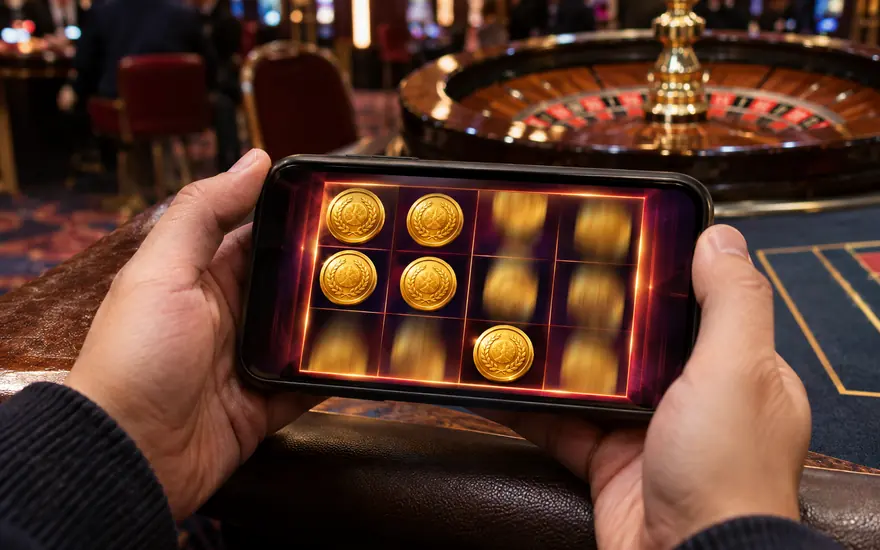
On a small screen, confirm that the remaining-respin counter, collected total and stake are three identifiable fields. Landscape orientation may make a wide grid easier to inspect, but the interface must still expose the rules and the exit controls. Decorative motion is less useful than legible state information.
If a connection is interrupted, reconnect through the operator's normal account route and consult the round record before placing another wager. A frozen animation is not enough to establish whether a round settled. Avoid repeatedly pressing a control when the interface has not confirmed the previous action.
This publication's photographs show the topic rather than an actual casino interface. The source links identify provider descriptions, while the account's own game rules establish the live configuration. That distinction prevents a thematic image from being mistaken for evidence that a particular operator supplies the illustrated game.

Which comparison fields are worth keeping?
Start with the full title and provider, then record the trigger, retained object, starting allowance, reset or extension event and end conditions. Add collectors and multipliers only where their roles are documented. These fields expose a meaningful difference even when two games share the same broad category label.
Leave an unknown field out of a comparison instead of borrowing a value from a near-identical sequel. A short table with established rules is more useful than a complete-looking table assembled from inconsistent releases. The editorial policy explains how this publication separates sources from interpretation.
For another kind of persistent symbol, continue with sticky wild slots. For a round where winning symbols disappear before replacement symbols fall, use cascading slots. The game notes index links these tasks without treating them as interchangeable slot rankings.
Which two counters should never be combined?
A collection target and a remaining-respin allowance can change on the same result, but they describe different things. An illustrative feature might have seven collected symbols and two remaining respins. Adding one symbol could increase the collection to eight while restoring the respin allowance under its separate rule.
Writing eight spins remaining would therefore be wrong: eight is the collection count, not the allowance. Keep the labels attached when recording a feature. This is particularly important where a mobile interface places both figures close together or hides one during an animation.
The settlement total is a third field, calculated from the symbol values and any applicable modifiers. Seven collected symbols need not have equal values, so the collection count cannot stand in for their sum. Keep three labels in the round note: symbols collected, respins remaining and resulting award. Each then answers its own question, and a change in one field is less likely to be copied into another.
If a review provides only a large final result and no intermediate labels, it cannot establish the counter sequence. Use the game's own description for the rule, and treat the displayed final result only as evidence of the recorded settlement rather than a universal example of how every feature proceeds.
A counter reset is different from adding every visible number
A feature can display a count of remaining respins alongside value-bearing symbols. The count describes remaining opportunities within the feature, while the symbols describe another part of its state. They should not be added together as if they were the same unit.
When a game's rule resets a counter after a specified event, record the event and the new counter state. A reset is not necessarily the same operation as adding the new number to the old one. The source's wording determines how the counter should be followed.
To check a reset in a record, compare the counter immediately before and after the qualifying event. If it moves from one to three under a reset-to-three rule, two opportunities have been restored. If it moves from two to three, only one has been restored. The destination is the same, but the change depends on the previous state. That is why both observations belong in the sequence.
A symbol value and a collection event are separate observations
A value visible on a retained symbol can be relevant to a later calculation. It does not mean that the value should be added independently every time the screen redraws. The collection or settlement rule determines when and how the value contributes.
This distinction matters when a feature contains a collector or another operation acting on retained symbols. The same displayed value can remain part of state across several screens. Counting it again after every animation can inflate an explanatory total.
Keep a short event record: what was present, what changed and which rule evaluated the change. The comparison can then identify differences between designs without assigning the same collection behaviour to every game described as Hold and Win.
Follow an illustrative feature without inventing its payout
Begin a hypothetical sequence with several occupied positions and several empty ones. Record the initial counter according to the particular example's stated rule. Then describe one new symbol arriving and identify which positions remain unchanged.
The useful question is what the arrival changes. It may affect occupancy, a counter or another feature-specific state under the published rule. The illustration should state only the operation being explained. It does not need an invented win amount to make that operation understandable.
Continue until the example's defined ending event, then distinguish the final evaluation from the intermediate displays. A photograph of a nearly full board would not establish the final total, and a remembered animation would not replace the account's actual round history.
A full board needs the game's own ending rule
Filling visible positions can have different significance in different products. It should not automatically be described as a jackpot, a particular multiplier or the end of every feature. The comparison needs the rule attached to that specific game's full-board state.
If the source defines an additional condition, retain it. If the evidence does not establish what happens next, do not borrow the outcome from a different title. A familiar grid shape is not proof of a shared award structure.
The same caution applies to extra positions or feature expansions. More visible cells describe a layout change, not an automatic financial advantage. The article can compare how the state is organised without promising that a larger board produces a better session.
Compare the ending event as carefully as the trigger
A feature's trigger explains how it starts. Its ending event explains when the result can be read as complete. Both are needed before intermediate values can be interpreted. A start condition alone cannot define the duration or total of the feature.
When comparing designs, give the ending event its own field. It may concern the counter, occupancy or another stated condition. Do not substitute a generic description such as “until it stops” when the provider supplies a more precise rule.
The practical value is avoiding a premature total. A displayed amount before the ending event can be an intermediate state already included in the eventual result. Read the completed round record rather than assuming each change is an independent cash award.
Two similar board pictures can represent different feature states
An image showing occupied positions does not necessarily reveal the remaining counter or the event that produced them. Two screens can look similar while belonging to different points in the sequence. The state needs more than a count of visible symbols.
Imagine two hypothetical records showing the same occupied cells. One has a respin left; the other has reached zero. Under a rule that ends the feature when the allowance runs out, the first can continue and the second is ready for settlement. A cropped picture of the symbols could make them look identical. Keeping the counter in view explains the difference without needing to invent either record's payout.
A collector history or another mode-specific state can create the same interpretive issue. If the rule uses that state, an isolated screenshot may omit it. The final round history or relevant sequence is more informative than a single attractive frame.
When comparing features, record the state that affects the next operation. Do not treat visual similarity as proof that two games use the same ending rule or will produce the same result. The comparison becomes more precise when its limits are explicit.
A mobile control does not rewrite the feature
On a phone, a meter, counter and symbol values may require a different reading order because the screen is smaller. The layout can change without changing the underlying rule. Identify which label belongs to each value before comparing screens.
An enlarged image or a portrait view can help read the interface, but it cannot establish the account's configuration or a feature's probability. The written rules remain necessary. A more legible screen is not additional evidence of a future result.
Where a recorded feature is disputed, retain the named release and available round reference. The game-note directory explains how to separate a round result from an account payment. A Hold and Win comparison is a guide to operations, not a method for forcing a feature or recovering a loss.
Questions about Hold and Win games
What does Hold and Win mean in online casino games?
It usually identifies a feature in which selected value symbols remain during further evaluations. The particular game's rules define entry, respins, collection and the end condition.
Do all Hold and Win slots start with three respins?
No. The examples above include different published starting allowances. A category label cannot replace the individual game's rule screen.
Are held coins the same as sticky wilds?
No. A held value symbol can be collected directly, while a wild normally substitutes in qualifying combinations. A game may use both, but their roles remain separate.
Can I play Hold and Win slots for real money in Britain?
Availability depends on the operator and the version offered. This feature comparison does not confirm a casino lobby or provide an operator signup route.
Does a nearly full grid make a jackpot due?
No. The visible state does not establish the probability of the next symbol, and a completed round does not create a guaranteed result on a later one.
How can I learn the rules without inferring them from an animation?
Read the retained-symbol description, counter rule and settlement section together. A provider overview helps identify the design, while the live game's rules establish its particular configuration.