
Slots & game rules / CASHIER TRACE NOTES
Cashier Trace game notes: stakes, rounds and settlement
 Partner offers · Country: United KingdomUpdated 11 November 2026
Advertising. Bonus amounts, ratings and review counts are supplied by advertisers and have not been independently verified. Check eligibility and current terms with the operator. 18+. These international campaigns have no dedicated GB offer; GB availability has not been confirmed.


These notes explain what a game's recorded amounts mean. Choose the question you need answered: a returned stake, a separate Tie wager, a table minimum or several symbol evaluations belonging to one paid slot round.
Great Britain · GBP · 18+Editorial check: 11 November 2026
On this page
- Follow the unit before the headline total
- Choose a rules question
- What these notes do not predict
- If the account record still does not reconcile
- Identify what was purchased before interpreting the result
- Keep the opening balance separate from one game's receipt
- A returned stake and net profit answer different questions
- A table outcome is not the name of every wager
- Main wagers and side positions need separate records
- A chip value does not necessarily define a table minimum
- A reel count does not establish how wins are formed
- Repeated symbol replacement can belong to one round
- Follow a multiplier with the event to which it applies
- A retained symbol is a state, not a bank receipt
- A trigger and its award are separate facts
- Identify the original release before using a published figure
- Configuration belongs beside theoretical return
- Volatility labels need a source and a scale
- An upper outcome is not an expected result
- A practice demo can help inspect a rule
- An image explains a subject without verifying a round
- A round-history enquiry should identify the disputed operation
- A game settlement and a payment receipt are different stages
- The same closing balance can follow different sequences
- Choose another note by the rule you need
- Sources
Follow the unit before the headline total
A bet is the amount committed; an award or receipt describes what comes back under the game's rules. That receipt may include the original stake. To understand the result, find the complete recorded wager and compare it with the completed settlement. The biggest number in an animation may be only one part of that calculation.
The same approach helps distinguish a table's acceptance rule from the amount available in an account. A small chip denomination need not satisfy a position's minimum, and a cashier deposit floor does not identify a game's minimum wager. Our deposit explanation covers that separate funding question.
- Blackjack push
A returned main stake is separate from profit and side bets.
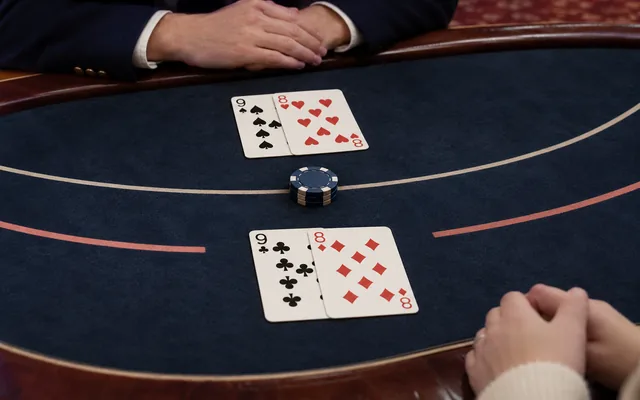
- Baccarat tie bet
One outcome, three possible betting positions.

- Roulette minimums
Read the minimum by position or betting category.

- Cascading slots
Several evaluations can belong to one purchased round.

- Gonzo’s Quest
Identify the original release before comparing its rules.

- Hold & Win comparisons
Compare retained value symbols, counter resets and collectors.

- Sticky wild comparisons
Compare persistence windows, modes and removal events.

Choose a rules question
| Note | Question it answers |
|---|---|
| Blackjack push | Why can a stake return without profit? |
| Baccarat Tie bet | Why does a tie treat three betting positions differently? |
| Roulette table minimum | Does the minimum measure a position or a category total? |
| Cascading slots | Can one paid round contain multiple evaluations? |
| Original Gonzo's Quest | Which release does the avalanche description concern? |
What these notes do not predict
An explanation of settlement does not identify the next outcome. A past sequence, theoretical percentage or example calculation cannot establish what a particular session will return. The amounts in hypothetical examples are labelled and are not live offers, paytables or claims of personal game testing.
Where a rule varies by version, the note identifies that boundary. The exact game help and round record remain important. We do not reproduce a publisher's character or pretend a thematic photograph is a screenshot of a tested game.
If the account record still does not reconcile
Keep comparisons at the level of the question. A returned card-game stake and an accumulated slot award can both change a balance, but they follow different rules. These notes connect the concepts without treating every matching word or similar-looking amount as the same settlement event.
Keep the table or title, version, round identifier, full stake and settlement components. Ask the operator to explain the specific entry that does not add up. The complaints guide describes organising that evidence without placing another wager to recreate a result.
If the issue is becoming a reason to keep gambling, visit independent support. Understanding a record and choosing to stop are compatible decisions. This index contains no play links or recommendations to fund an account.
Identify what was purchased before interpreting the result
A game record begins with the unit of play. It might be a paid round, a hand or a betting position. The animation shown afterwards can contain several events, but those events should not automatically be counted as separate purchases.
The unit matters because it determines which stake belongs with the completed result. A large displayed total can be misleading if it is compared with only one component of the selected wager. Begin with the game's own total-bet or stake description.
This directory helps choose a rules question. It does not identify a profitable game or prescribe a stake. The aim is to understand what the record means before using it to explain an account entry.
Keep the opening balance separate from one game's receipt
An account balance can include money present before the round. A receipt from the round is a different amount. Comparing the receipt directly with the closing balance can therefore produce a false discrepancy.
For an entirely hypothetical example, an opening £10 balance, a £1 stake and a £1 returned stake would leave the same balance before other activity. The returned pound is not a pound of net profit in that simplified example.
The calculation is opening balance minus stake plus receipt: £10 − £1 + £1 = £10. To apply that relationship to a record, first check whether other entries or balance categories are involved. A deposit, separate credit or another round between the two balance observations would need its own line. The closing figure cannot explain those intervening events by itself.
A returned stake and net profit answer different questions
A settlement can return money that was originally staked. Calling the entire receipt profit would count that original stake as a gain. A clear explanation identifies whether a figure includes the returned stake or describes only an additional amount.
Imagine a fictional £2 wager and a total receipt of £5 under a stated example rule. Subtracting the £2 stake gives £3 net gain in that simplified record. If a different display already labels £3 as profit, adding or subtracting the stake again would change the meaning incorrectly.
The blackjack push note illustrates why this distinction matters for a returned main stake. Other games need their own rules. A shared word such as return should not be assumed to use the same calculation in every product.
A table outcome is not the name of every wager
A table can have one completed outcome while different wagers on that outcome settle differently. The result label and the position on which money was placed must both be identified before the receipt can be interpreted.
The baccarat tie explanation separates the table result from the Player, Banker and Tie betting positions. Its purpose is not to recommend one position. It shows why the word attached to the outcome cannot replace the rule attached to the actual wager.
For an account enquiry, retain the position and round information available from the original record. A screenshot showing only the result headline may not establish which wager was placed. The operator holding the round history is the appropriate source for account-specific evidence.
Main wagers and side positions need separate records
A returned main stake does not necessarily explain every amount placed during the round. Other positions can have their own eligibility and settlement conditions. Combining them into one undifferentiated stake can obscure the source of a difference.
List each selected position beside its stake and settlement rule. A main hand and a side wager can then be checked separately before their receipts are added together. Use the original selection record for this list; an advertisement or an example may show positions that were never selected. If a position is missing from the record, identify that missing field in the enquiry instead of guessing it.
This is a reading method, not a claim that every game offers the same side wagers. Product and version remain important. A rule from another table cannot be imported simply because the main game has the same name.
A chip value does not necessarily define a table minimum
A chip can be an interface denomination used to construct a wager. A table condition can apply to a position, a category or another stated total. The chip's face value alone may therefore not answer whether the selected wager meets the relevant rule.
The roulette minimum note examines this distinction. It keeps the amount selected on the layout apart from the rule governing acceptance. It also explains why the cashier's payment floor is a different question.
When reading a table message, retain its exact scope. “Minimum” is incomplete without the unit it measures. A familiar number from another layout or a different table does not establish the condition applying to the current selection.
A reel count does not establish how wins are formed
Games can display rows and columns while using different evaluation rules. A visible grid is therefore not enough to establish whether wins use lines, ways or connected groups. The rule describing eligible combinations needs to be checked.
A comparison of mechanics should name the operation. Connected clusters, evaluations across reels and fixed lines are different structures even when the symbols look similar. The named-game catalogue identifies specific releases so that those details remain attached to the correct product.
Do not infer the pay rule from an illustrative image. The artwork helps locate the subject but does not reproduce every configuration of a real game. Published rules and the loaded version's information panel are the appropriate sources for the calculation.
Repeated symbol replacement can belong to one round
A winning evaluation may be followed by replacement symbols and another evaluation under a game's stated rules. That visible activity can all belong to one paid round. Counting each animation as another purchase can misstate the stake.
The cascading-slot explanation follows this relationship. It distinguishes a paid round from the events inside it and keeps the final total separate from intermediate displays. A replacement is an operation, not automatically another independently authorised stake.
The rule still needs its specific product context. Not every replacement game forms wins in the same way, uses the same multiplier or ends on the same event. A general mechanic label is a starting description, not a complete rulebook.
Follow a multiplier with the event to which it applies
A multiplier needs a base amount or eligible result. A displayed multiplier by itself is not a payment. Before calculating anything, identify what it modifies and when the game's rule says it is applied.
Follow the order shown in the rules: first the eligible evaluation, then any multiplier change, then the event to which the new value applies. These steps need not happen together. Also check whether a displayed award already includes the modifier. Multiplying that award again would count the same effect twice and create a discrepancy that was absent from the original settlement.
The original Gonzo's Quest note provides a product-specific avalanche example. Other releases can use different sequences. The directory does not transfer one game's progression rule to another because both use falling symbols or an increasing number.
A retained symbol is a state, not a bank receipt
A symbol can remain visible while other parts of a feature change. That retained state may matter to later evaluations, but it is not itself evidence that an amount has reached an account or bank.
The Hold and Win comparison concerns retained value symbols and counters. The sticky-wild comparison concerns the lifetime and modification of wild symbols. Their visual similarity does not make the underlying operations identical.
To follow persistence, identify what creates the state, what changes it and what ends it. A description such as “stays on screen” is incomplete without those boundaries. The final settled result needs to be read after the feature's actual ending event.
A trigger and its award are separate facts
A feature trigger describes an event that changes the mode or starts another operation. The resulting award, initial count or modifier is a separate field. The fact that a trigger occurred does not by itself establish the final amount the feature will produce.
When reading a source, keep the trigger's conditions and the stated award together. A familiar scatter symbol does not imply that every game uses the same number of symbols or grants the same feature. The product's own description is required.
When following a feature, note the triggering event, the transition and the starting count or modifier. Then track later changes until the stated ending event. This gives the sequence a clear beginning and end. It helps distinguish what was awarded at entry from what accumulated afterwards, while leaving the eventual cash result to the completed record. It offers no method for forcing a trigger.
Identify the original release before using a published figure
Names can be similar across sequels, mobile variants and related themes. Before using a figure, establish the exact release described by the source. A later edition's data should not fill a missing field in an earlier game.
The named-game notes retain the provider and release identity with their published details. Where a field could not be confirmed, it is omitted. The absence of a value is preferable to a complete-looking table built from another product.
If a demo opens a different title, do not treat the visible game as automatic confirmation of the article's original release. The mismatch is a boundary to investigate, not a cosmetic detail that can be ignored because the artwork looks familiar.
Configuration belongs beside theoretical return
A provider may publish different configurations for a game. An RTP figure needs to be attached to the published model it describes. A general product page does not automatically identify the configuration used by every operator account.
The figure also has a limited meaning. A theoretical long-run return is not a promise about one round, a sequence of free spins or a reader's balance at the end of a session. The published number should not be converted into a short-session prediction.
If the loaded game's own information differs, preserve the difference rather than choosing whichever value appears preferable. A useful enquiry identifies the release and displayed configuration. An unsupported assumption about the account version cannot resolve the question.
Volatility labels need a source and a scale
A provider's volatility description should remain attached to that provider's classification. A numerical rating without an explained scale should not be translated into low, medium or high merely to make a table easier to sort.
Even a clearly stated label does not define a payout timetable. It cannot tell a reader how many rounds will occur before a feature, how long a balance will last or which future result will appear. Those claims go beyond the description.
The catalogue therefore displays only supported labels. It does not turn an unknown field into a favourable default. A game can still be explained through its mechanics when a classification has not been established.
An upper outcome is not an expected result
A published maximum multiplier describes a different quantity from the typical result of a round. It does not show that repeated attempts must approach that upper outcome or that a particular balance is enough to reach it.
The multiplier also needs its stated base. A figure expressed relative to the full bet should not be applied to a smaller denomination or one component without checking the wording. The arithmetic depends on the unit.
This publication can explain that distinction without inventing the probability of an upper outcome. A dramatic number is not a reason to infer a winning method, a session length or an amount that a reader should commit.
A practice demo can help inspect a rule
A checked provider demo can be useful for locating an information panel or following how an event is presented. It uses virtual credit and may display a currency different from the publication's GBP examples.
The practice display does not establish a casino account's stake range, payment methods or availability. A virtual balance cannot be withdrawn. A favourable demonstration is not evidence that real losses can be recovered through the same sequence.
Some named pages have a verified embedded launch and others retain a visual explanation. The status is stated on the relevant page. The directory does not claim that every game can be played here merely because it has an article.
An image explains a subject without verifying a round
The generated scenes show recognisable casino objects and game motifs. They are not authentic screenshots of a reader's account. A phone with symbols or a chip arrangement cannot establish which bet was authorised or how a real round settled.
Use the image as context and the written source as evidence for a rule. If a screenshot from an actual account is relevant to an enquiry, keep its product, round and date context. A cropped outcome headline may omit information needed to interpret it.
Private account material does not need to be sent to this publication. The privacy page distinguishes a general reading task from the secure evidence process of an organisation handling an account.
A round-history enquiry should identify the disputed operation
An account-specific game question is easier to investigate when it identifies the operation being challenged. It may concern a returned stake, a selected position, an applied multiplier or the relationship between intermediate and final totals.
Preserve the available round reference, product name, stake and displayed result. If a field is missing, state that rather than supplying a plausible value from an example. The organisation holding the game history is the source for the actual account record.
The contact guidance explains how to separate a publication correction from a provider enquiry. A general article can clarify terminology, but changing its wording does not reverse a round or alter an account balance.
A game settlement and a payment receipt are different stages
A completed game result can affect a casino account balance. A later request to move money from that account is another action. A bank or wallet entry belongs to a further record. Those stages should not be described as one event.
If the game result itself is unclear, begin with the game history. If the account result is understood but an outgoing instruction is unresolved, use the payment-stage index. A screenshot of a feature cannot establish the status of that later instruction.
This separation prevents a correct rules explanation from being used as an answer to the wrong question. A returned stake, an available balance and a receiving-bank credit may concern related money while remaining different quantities with different evidence.
The same closing balance can follow different sequences
An account total is not a complete game history. Two different sequences can lead to the same closing amount, so the total alone cannot identify which stake or receipt occurred. The round-level entries are needed to explain the path.
Consider two deliberately simplified fictional records, both beginning with £20. In the first, a £2 stake and a £2 total receipt restore the opening amount. In the second, a £1 stake is lost and a later separate £1 credit is recorded. Both examples end at £20, but their events are different.
In the second record, the separate credit still needs a label and supporting entry. Its source has deliberately been left open: the example is comparing two paths to an equal balance, not explaining that credit. To investigate either path, you would need the individual entries. The fact that £20 appears at both ends is a useful check on addition, but it cannot identify which wager settled between them.
The reverse is also possible: a correct round settlement can coexist with a different closing balance because another documented entry occurred afterwards. Before challenging the game calculation, identify the observation time and any intervening activity. Do not force the account total to describe a single round by ignoring the rest of the record.
This is why the notes distinguish the purchased unit, intermediate events and completed result. The sequence needs an ending and an identifiable relationship to the account entry. An attractive screen, a remembered animation or an equal opening and closing balance cannot supply every missing part of that sequence.
Choose another note by the rule you need
For returned main stakes, begin with the blackjack push explanation. For a table outcome and different betting positions, use the baccarat tie note. For stake acceptance on a layout, use the roulette minimum guide.
For repeated evaluations inside a purchased round, use the cascading-slot article. For specific retained-state comparisons, use Hold and Win or sticky wilds. For a particular named release, move to the catalogue and confirm its identity before using numerical details.
The aim is a better-defined question, not an instruction to play another game. Reading can end when the unit and rule are understood. If gambling is causing difficulty, the independent support page remains a separate next step without a requirement to complete the game research.
Sources
- Source links and version qualifications appear within each linked game note.
The named-game catalogue now follows ten specific releases, with separate feature rules and checked demo status. Use it when a general mechanic explanation is not enough to identify the game.