
Publication & help / CASHIER TRACE NOTES
Casino complaints: explain the disputed payment in writing
 Partner offers · Country: United KingdomUpdated 11 November 2026
Advertising. Bonus amounts, ratings and review counts are supplied by advertisers and have not been independently verified. Check eligibility and current terms with the operator. 18+. These international campaigns have no dedicated GB offer; GB availability has not been confirmed.



For a casino payment complaint, use the operator's formal complaints procedure and keep a dated record of the disputed amount, transaction reference and response. If it remains unresolved, an approved alternative dispute resolution provider may be the next route under the applicable procedure.
Cashier Trace cannot handle a casino account or decide a claim. This guide helps organise a complaint about existing funds; it does not recommend depositing again, continuing play or paying someone who promises to release money.
Great Britain · GBP · 18+Editorial check: 11 November 2026
On this page
- Define the decision you are challenging
- Build a short evidence record
- A payment-complaint structure you can adapt
- When can alternative dispute resolution become relevant?
- If more information is requested
- Avoid a second financial problem while pursuing the first
- Give the complaint a boundary that can be investigated
- Build a chronology from records rather than memory
- Reconcile a partially received amount before stating a remedy
- Distinguish a request status from a balance entry
- Keep a transaction reference beside its owner
- State the difference between an observation and an inference
- Ask for a resolution that matches the disputed event
- Version the evidence package when new information arrives
- A saved term needs its date and context
- Separate a support promise from a completed action
- A document request should have an identifiable purpose
- A bank or wallet enquiry needs the correct stage
- Escalation should carry the unresolved question forward
- A public review is not the private complaint file
- Preserve wellbeing separately from the financial argument
- A final self-check before submitting
- Questions about complaints
- Sources
Define the decision you are challenging
Describe one concrete issue: a withdrawal rejected without a usable explanation, an allocation that does not reconcile or a disputed adjustment to a balance. State what happened, what the account shows and the remedy you seek. A chronology is more useful than an accusation about every aspect of the service.
Identify the operator and the account concerned using its established secure route. A brand name alone may not identify the legal business handling the complaint. Read the operator's complaints page to establish where to submit it, which information it requires and how it confirms receipt.
Keep ordinary support enquiries and the formal complaint distinct. If an earlier conversation did not register a complaint, say explicitly that you are now using the complaints procedure. Retain the date and confirmation so you can later explain when the formal process began.
Build a short evidence record
Use the amount and currency actually disputed. If part of a split request arrived, calculate the remaining component instead of automatically claiming the full original total. The split withdrawal guide shows how to separate the request, allocations and individual receipts.
| Record | Include | Keep private or omit |
|---|---|---|
| Transaction | Amount, currency, date, reference | Passwords, PINs and one-time codes |
| Account history | Relevant debit, reversal and settlement entries | Unrelated personal activity |
| Terms | Applicable wording and saved date | Unnecessary full-site screenshots |
| Correspondence | Request, response and promised next action | Public posting of identity documents |
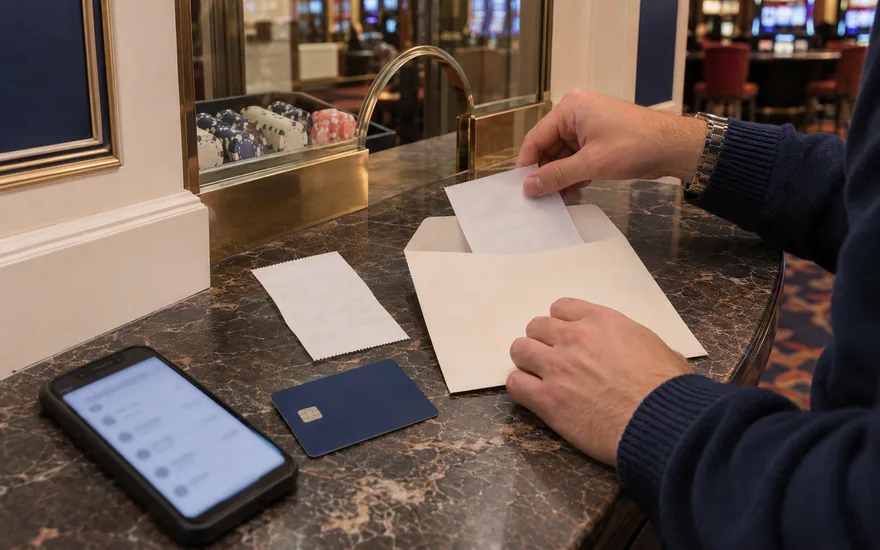
Preserve originals without editing the relevant amounts or dates. For a copy shared outside a secure account route, redact unrelated personal details and sensitive account information. Do not send the only copy of a document or publish identification files in an attempt to attract a faster answer.
A payment-complaint structure you can adapt
Begin with a subject identifying the issue and reference. In the opening paragraph, state the request date, disputed amount and current status. Then give a brief chronology of relevant support replies, including anything you were asked to provide and the date it was supplied.
Follow with the unresolved question. For example, ask where a rejected request's amount is recorded, which destination received an allocated part or which contractual term caused a balance adjustment. Request a written explanation linked to the account entries, rather than a general statement about processing.
Finish with the resolution sought and a list of supporting records. If you seek payment, identify the amount still outstanding. If you seek correction of an entry, identify it precisely. You do not need to exaggerate the amount or make unsupported allegations to present a clear dispute.
When can alternative dispute resolution become relevant?
The Gambling Commission explains that a consumer can normally take an unresolved complaint to the operator's approved ADR provider after eight weeks, or earlier when the operator issues its final position or deadlock response. The relevant process and circumstances must be checked; this is not a promised payout deadline.
Follow the operator's stated route to its approved provider and retain the final response. ADR considers disputes within its remit. Not every objection to a business, advertisement or regulatory practice is a claim that the same provider can determine. Describe the actual issue so it can be directed appropriately.
The Commission also explains that it does not resolve individual complaints or recover money on a consumer's behalf. Reporting information to a regulator is therefore different from submitting a financial dispute for resolution. Keep a copy of whatever route you use and the outcome you receive.
If more information is requested
Respond through the established channel and keep the request with your reply. Ask for clarification if it does not explain which transaction or document is needed. Failure to engage with a reasonable request can affect progress; repeated disclosure of the same sensitive files through unfamiliar channels is not a sensible substitute.
For a rejection connected with identity information, our withdrawal rejection page explains the distinction between the request's status and the information being sought. For an amount described as a maximum, use the transfer-limit note to identify the precise rule being disputed.
Avoid a second financial problem while pursuing the first
Do not pay an unsolicited intermediary who claims that a fee will unlock a withdrawal or guarantee a successful complaint. Verify any contact independently through the operator or dispute body's official route. A message containing a familiar logo is not proof that the sender represents either organisation.
A dispute can also create pressure to continue playing or recover losses. Resolving an existing balance does not require making gambling the solution to that pressure. Our support page links to independent help and explains the difference between getting support and pursuing a financial complaint.
Give the complaint a boundary that can be investigated
Open with the decision or entry you want explained. It may be a cancelled request without a visible reversal, an unreceived part of a split payment or a deduction linked to a term. Name that event and the amount still in dispute before adding background.
Earlier deposits may help explain the history, but they should not automatically become the current claim. Label background activity separately and identify which record would show the disputed amount had been paid, restored or corrected.
This boundary also gives you a way to assess the reply. If the question is where one cancelled request's amount returned, general withdrawal guidance leaves it unanswered. Point to that remaining item in a follow-up. You can stay direct without expanding the complaint into every unrelated disagreement with the service.
Build a chronology from records rather than memory
List the dated events that changed the disputed amount, status or next action: the request, relevant account entry, status change, enquiry and reply. Use the dates shown in the records. Add the time zone where it affects the order, and label an approximate recollection as approximate.
Keep an event's date separate from the date you learned about it. A support reply received later may describe a payment sent earlier. Sorting only by inbox dates can put those events in a misleading sequence.
You do not need an entry for every login or page viewed. Select the events that explain how the issue reached its present state, then keep the supporting messages beside them. A reader should be able to follow the payment history without searching through unrelated account activity.
Reconcile a partially received amount before stating a remedy
Use this hypothetical split to check the amount sought: a £120 request has £70 and £50 components, and the £70 part arrives. Begin with the remaining £50 question and acknowledge the £70 receipt. Asking for the full £120 would overstate what is missing in that example.
Next, follow the £50 component's status. If it was rejected and returned to the account, the question may now concern access to that balance or a new instruction. Keep the allocation, receipt and reversal references together so the requested remedy follows the current event.
This calculation does not decide the complaint. It identifies what the operator needs to explain: the £50 component, its destination and final status. A reply about the completed £70 part should not be treated as an answer to that remaining question.
Distinguish a request status from a balance entry
Rejected, pending and completed can be labels attached to a withdrawal request. The account ledger describes movements of money. A request label alone does not establish whether an amount was reserved, debited, restored or paid, so the two views need reconciling.
For an invented cancelled £40 request, ask which entry restored the £40 if a return is claimed. If the account never debited the amount, the answer may concern a released reservation instead. The appropriate description depends on the actual ledger rather than a guessed sequence.
Include a screenshot or export showing the relevant entries through the operator's secure route. A cropped status badge may omit the money movement you need explained. The complaint should ask for the connection between the status and the balance instead of treating them as identical records.
Keep a transaction reference beside its owner
Several references can exist for one payment journey: an operator request number, a provider transfer reference and a bank's receipt reference. Write which organisation issued each one. Similar-looking strings are not automatically interchangeable or searchable by every party involved.
If support gives a new transfer reference, retain it beside the earlier request number rather than replacing the earlier number. The connection may be needed later to show which instruction the transfer concerned. A single unlabelled list of identifiers can lose that relationship.
Do not publish complete sensitive payment credentials while trying to demonstrate that references match. Use established secure channels for account-specific evidence. A public explanation can use masked references while the complete originals remain available privately to the party authorised to examine them.
State the difference between an observation and an inference
Describe what the record shows before proposing why it happened. “No matching credit appears on the statement over this period” is an observation. “The operator never sent the money” is a possible explanation that still needs dispatch information.
Ask for that missing confirmation alongside the observation. A provider reference, corrected destination or documented return may explain the same absence in different ways. Keeping the first statement accurate lets the explanation develop without rewriting what you originally saw.
Apply the same care to support messages. Preserve the wording and date, then ask which stage it confirms. Processed may refer to an internal action, submission or another event. It should become a statement about bank receipt only when the relevant record supports that connection.
Ask for a resolution that matches the disputed event
A useful requested resolution can be payment of an identified outstanding amount, restoration of a wrongly removed balance or a written explanation linked to a specific rule and entry. Choose the wording that fits the records rather than combining incompatible remedies without explanation.
If you want a correction, identify the entry and the corrected amount you believe should appear. If you want a payment trace, identify the transfer and destination in masked form. The investigator can then assess the requested action against the record you supplied.
Avoid demanding a guaranteed outcome by an invented deadline. You can request confirmation of receipt and the next procedural step without claiming a universal processing time. The procedure's actual times and the financial transaction's status should remain separately described throughout the correspondence.
Version the evidence package when new information arrives
Keep unchanged originals and a dated list of what you submitted. Add a new receipt or support reply as another item, with a note of how it changes the current position. This preserves what was known at each stage while letting the complaint remain up to date.
If a missing part arrives, acknowledge it in the next summary and reduce the amount still disputed. Retain the earlier non-receipt record as history; it may still explain why the complaint began. The updated claim and original chronology serve different purposes.
Use filenames that identify the date, document type and masked reference without unnecessary account details. Keep passwords, full payment numbers and identity-document numbers out of filenames as well as public text. A file list may later travel with an email or shared folder, even when the documents themselves remain private.
A saved term needs its date and context
Where the dispute concerns a limit or promotion, retain the applicable wording with its title and saved date. A phrase copied without the section heading can lose an exception or the unit it measures. The surrounding context may be essential to the disagreement.
A current page can differ from what was visible when the disputed event occurred. Describe which version you have rather than asserting that a later screenshot proves earlier wording. If the operator relies on another version, ask it to identify the relevant term and date.
Do not invent a missing rule to fill a gap in your evidence. A complaint can explicitly ask which condition the operator says applied. That request is more precise than selecting an unrelated clause from another operator or assuming every promotion uses the same restriction.
Separate a support promise from a completed action
Record a promise to investigate, send a trace or request a document as a promised next step. Look for its later result before marking it completed. If that result is absent, follow up on the particular promise under the existing reference.
When support confirms payment initiation, connect the statement to the amount and transfer reference. It may answer when the payment was submitted while leaving receipt open. Acknowledge the answer it provides, then identify the next missing record.
This keeps each reply useful without repeating the whole history. Quote or identify the unanswered item and attach new relevant evidence through the established channel. Keep the complete original package available, while the short current summary tells the next reader exactly which action or decision still needs explanation.
A document request should have an identifiable purpose
If the operator requests information, ask which account, transaction or verification issue it concerns when that is unclear. Keep the request and your response together. A record of what was requested and supplied can prevent a later disagreement about whether a procedural step occurred.
Use the operator's established secure channel rather than an address supplied by an unsolicited intermediary. Do not send passwords, one-time codes or remote-access credentials. These details are not required to explain a payment amount, and giving them away creates a separate account-security problem.
Cashier Trace does not accept identity documents or inspect private casino accounts. The public article can explain how to organise a record, but it cannot confirm that a particular document meets an operator's requirements or decide whether an account-specific request was appropriate.
A bank or wallet enquiry needs the correct stage
When a payment is said to have been sent, the receiving bank or wallet may need the provider's transfer details rather than the casino's internal request number. Ask the sender which trace information identifies the transfer. Keep that information paired with the amount and currency.
Do not assume that a receiving institution can see an instruction that has not been submitted to its payment system. Conversely, a sender's completed internal review does not prove receipt. The enquiry should identify which stage each organisation is being asked to confirm.
If a provider reports a returned transfer, ask where the return is recorded at the originating account. A return can create a new reconciliation question even after the first destination problem is explained. Keep the outbound and return references distinct rather than calling both events one missing payment.
Escalation should carry the unresolved question forward
Before following the applicable escalation route, update the summary to distinguish resolved items from remaining ones. Include the formal complaint confirmation, relevant response and current disputed amount. A new reader should be able to understand the claim without reconstructing an unlabelled inbox archive.
The complaints framework described in the cited guidance is separate from a transfer's delivery time. Do not treat the escalation stage as a guaranteed date on which a withdrawal will arrive. It concerns how an unresolved dispute can be considered through the applicable process.
Use the provider identified by the relevant operator procedure and check its remit. This article does not select an adjudicator for an unidentified private account or promise a decision. Organising evidence improves clarity; it does not determine whether a claim falls within a body's process or succeeds.
A public review is not the private complaint file
You may want to describe an experience publicly, but a public post should not contain the full account evidence package. Identity files, payment credentials and unrelated statements expose information without necessarily helping the party authorised to examine the dispute.
Keep factual statements proportionate to what the records establish. A missing receipt over a period is a narrower claim than an allegation about why it is missing. If a later correction or payment changes the position, update your own summary so it remains accurate.
A social reply carrying a familiar logo does not establish authority to receive documents or money. Return to independently established contact details before sharing account information. Do not pay a person who promises to bypass the complaint process or guarantee release of disputed funds.
Preserve wellbeing separately from the financial argument
A disputed balance can be stressful even when the paperwork is clear. It does not need to become a reason to continue gambling, increase stakes or attempt to recover losses. The financial complaint and the decision to seek independent support can proceed as separate matters.
If you choose to stop playing while pursuing a complaint, keep access to correspondence and saved records through the legitimate available routes. Ask the operator how to obtain the relevant history if account access changes. Do not assume another deposit is required to preserve the claim.
Our support page provides independent starting points for people affected by gambling. It does not decide a financial dispute or replace the operator's complaint procedure. Both needs can exist at once, and getting help does not require waiting until the money question has been resolved.
A final self-check before submitting
Read the opening paragraph as if you knew nothing about the account. It should identify the disputed event, amount, currency and requested resolution. The chronology should explain how the issue reached its current state, with references that match the attached records.
Then check that the arithmetic acknowledges amounts already received or restored. Remove unsupported causes and mark missing evidence as missing. Confirm that sensitive material is going only through the established secure route and that your own unchanged originals remain saved privately.
The finished complaint does not need dramatic language or a fabricated certainty. It needs a specific question, supporting records and a clear request for the relevant decision to be explained or corrected. That is the useful work an editorial guide can help you do.
Questions about complaints
Can this website contact the casino for me?
No. Cashier Trace publishes explanatory material and does not receive account documents, investigate private accounts or submit claims.
Is eight weeks a withdrawal processing time?
No. It concerns the complaints escalation framework described by the Commission, not the receipt time of an individual transfer.
Should I include every amount I ever deposited?
Only where relevant to the dispute. Clearly distinguish the disputed sum from background deposits and money already received.